Job site operations · 7 minute read
Winter porta potty rental in Northeast Ohio: what actually changes
Lake-effect snow, frozen ground and shorter service windows change how a portable restroom order works between December and March. Here is what we adjust on winter job sites around Mentor and Lake County.
By NovaSani Porta Potty Pros ·
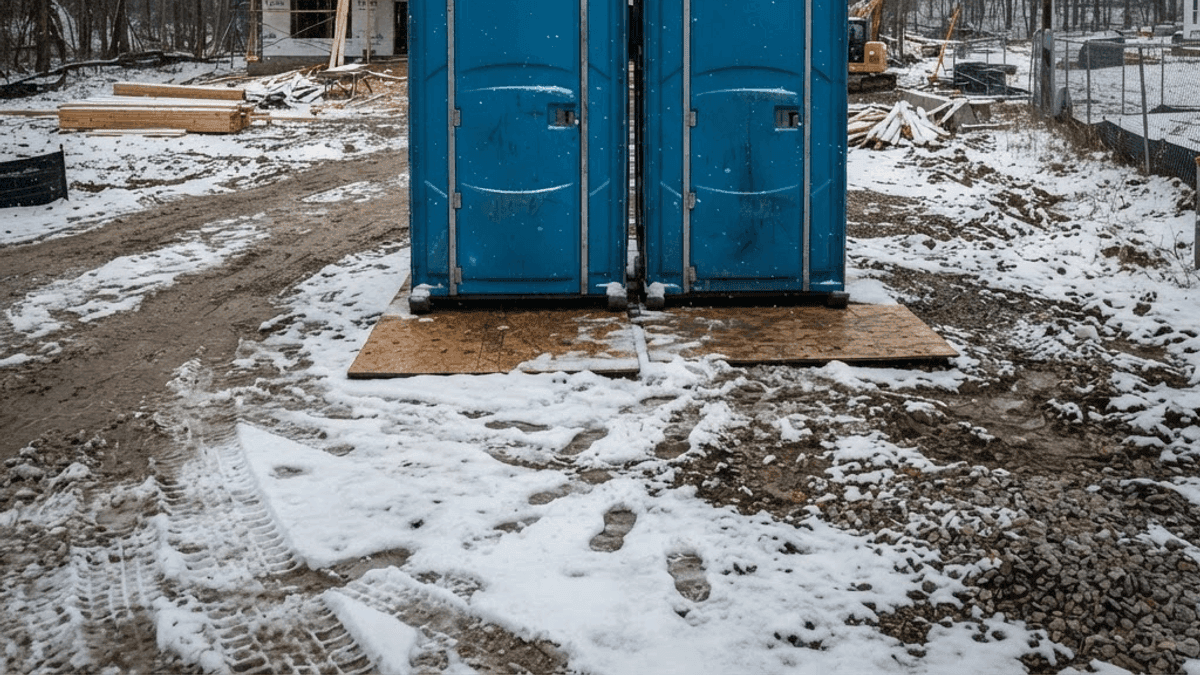
Most of what gets written about winter portable restrooms is written for a national audience, which means it is written for nowhere in particular. Northeast Ohio is a specific problem: we sit downwind of Lake Erie, which means lake-effect snow that arrives fast and heavy, followed by thaw-refreeze cycles that turn a passable gravel path into something a service truck has no business driving on.
None of this makes winter rental difficult. It makes it different. Below is what genuinely changes on a winter order, and what does not change despite being repeated constantly.
The units do not freeze the way people expect
The most common winter question is whether the tank freezes solid. In practice this is rarely the failure point. The waste in an actively used unit carries its own thermal mass and is not pure water, so it tolerates cold far better than a bucket of water left outside would. What does freeze is the thin film of liquid in exposed places: the sanitizer in the urinal trap, residue around the seat, and the moisture in a hand sanitizer dispenser mounted on an outside wall.
So the winterization work is targeted rather than dramatic. We shift the tank charge to a cold-weather mix, move sanitizer dispensers to the interior wall where body heat and sunlight through the roof panel keep them above freezing, and check door hardware, because a latch that collects meltwater in the afternoon is a latch that is frozen shut at seven the next morning.
Placement matters more in winter than in summer
In July you can put a unit almost anywhere firm and revisit the decision later. In January the placement you choose in week one is largely the placement you are stuck with, because moving a unit across frozen rutted ground is harder than setting it down was. This is the single decision that most affects how a winter rental goes.
- Put units where a plow can clear around them, not where a plow will bury them — the far side of a lot that gets pushed into a snow pile is the wrong side
- Keep them off low ground that collects meltwater, since that water refreezes overnight and locks the base to the ground
- Set them on plywood or a gravel pad rather than directly on bare dirt that will heave with each freeze-thaw cycle
- Face the door away from the prevailing northwest wind coming off the lake, which matters more for usability than people expect
- Leave a truck path that stays clear all season, not one that works only when the lot happens to be plowed
Service access is the part that actually goes wrong
A service truck is heavy, and it needs to get within hose reach of the unit. The thing that interrupts winter service is almost never weather on the service day itself — we work through snow routinely. It is the accumulated state of the site: a week of plowed piles narrowing the access lane, a soft thaw day that leaves ruts, then a hard freeze that sets those ruts like concrete.
If a site manager keeps one lane open to the unit, winter service runs on schedule. If nobody owns that, service becomes a negotiation. This is worth assigning to a specific person at the start of the job rather than assuming it will sort itself out.
What does not change
Service frequency generally does not need to increase for cold alone. Usage on a construction site is driven by crew size and shift length, and if anything crews take shorter breaks in cold weather. If your crew count is steady, your service schedule from October usually still fits in January.
The requirement to provide facilities does not change either. OSHA sanitation requirements for construction sites apply year-round, and cold weather is not an exception. If anything, the practical argument gets stronger: when the nearest alternative is a gas station fifteen minutes away, an on-site unit is the difference between a crew taking a five-minute break and losing half an hour.
A realistic winter checklist
- Decide placement with the plow route in mind before the first snow, not after
- Put something solid under the unit — plywood, gravel, or compacted stone
- Name the person responsible for keeping the service lane clear
- Move hand sanitizer and paper stock to interior mounting
- Tell us at booking that it is a winter job so the tank charge is right from day one
- Expect to keep the same service frequency you ran in the fall unless crew size changes
If you are planning a job that runs through the winter around Mentor, Painesville, Willoughby or anywhere else in Lake County, the useful conversation is about access and placement rather than the equipment itself. Tell us how the site gets plowed and we can tell you where the units should go.
Planning a winter job around Mentor?
Tell us how the site gets plowed and where the trucks can reach, and we will tell you where the units should sit.