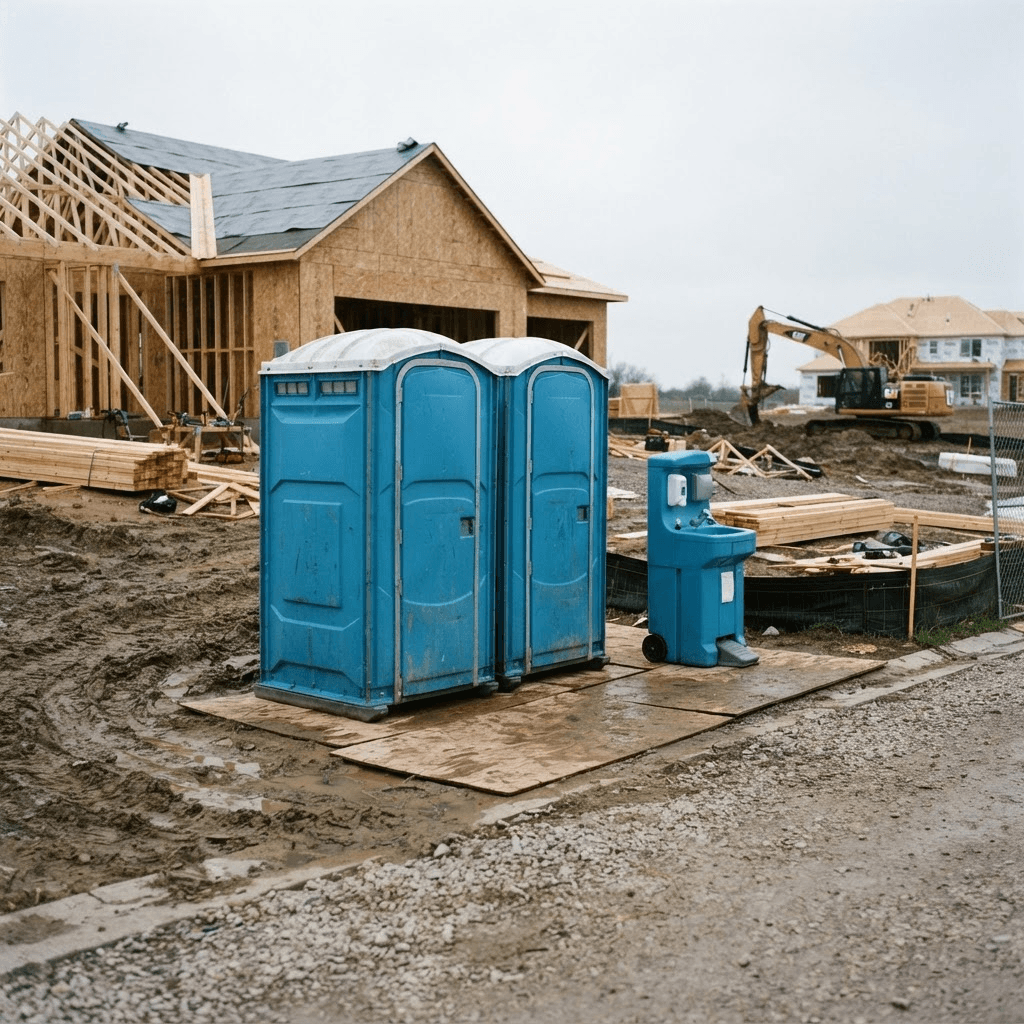
How job-site rental works
You tell us the crew size, the expected duration and where the truck can get in. We deliver, place the units, and put the site on a recurring weekly service route. Billing runs on a monthly cycle rather than per visit, so the cost is predictable for the length of the job, and the rental continues until you call for pickup.
OSHA's sanitation standard requires employers to provide toilet facilities at the worksite, scaled to the number of employees. The number of units on your site is ultimately your call as the employer — we will supply what you order and tell you honestly if it looks light for the crew you have described.
Placement that lasts the whole job
The most common problem on a long build is not the unit, it is the spot. A placement that made sense at excavation ends up behind a lumber drop, inside the swing of an excavator, or on ground that has turned to soup. Pick a spot at the perimeter, on the firmest ground available, near the crew parking rather than the far corner, and out of the way of where material will get staged.
Tell us when the site changes. Repositioning a unit takes minutes when we know about it and costs a wasted service visit when we do not.
Winter on a Lake County job site
Units keep working through the cold; the tanks carry a winter-rated deodorizer and contents that freeze are still pumped on the next visit once thawed. What actually stops a service visit is access — drifted snow, unplowed approaches and frozen ruts. If your site plows, include the restroom bank in the plow plan and the route stays on schedule all winter.