Planning and equipment selection · 6 minute read
How many porta potties do you actually need?
Nearly every quote call starts here, and most of the numbers floating around online are quoted without the assumptions attached — which is what makes them wrong about half the time.
Below is the way we size an order, including where the common ratios come from and the situations that make them unreliable. Treat it as a starting point for a conversation, not a compliance calculation.
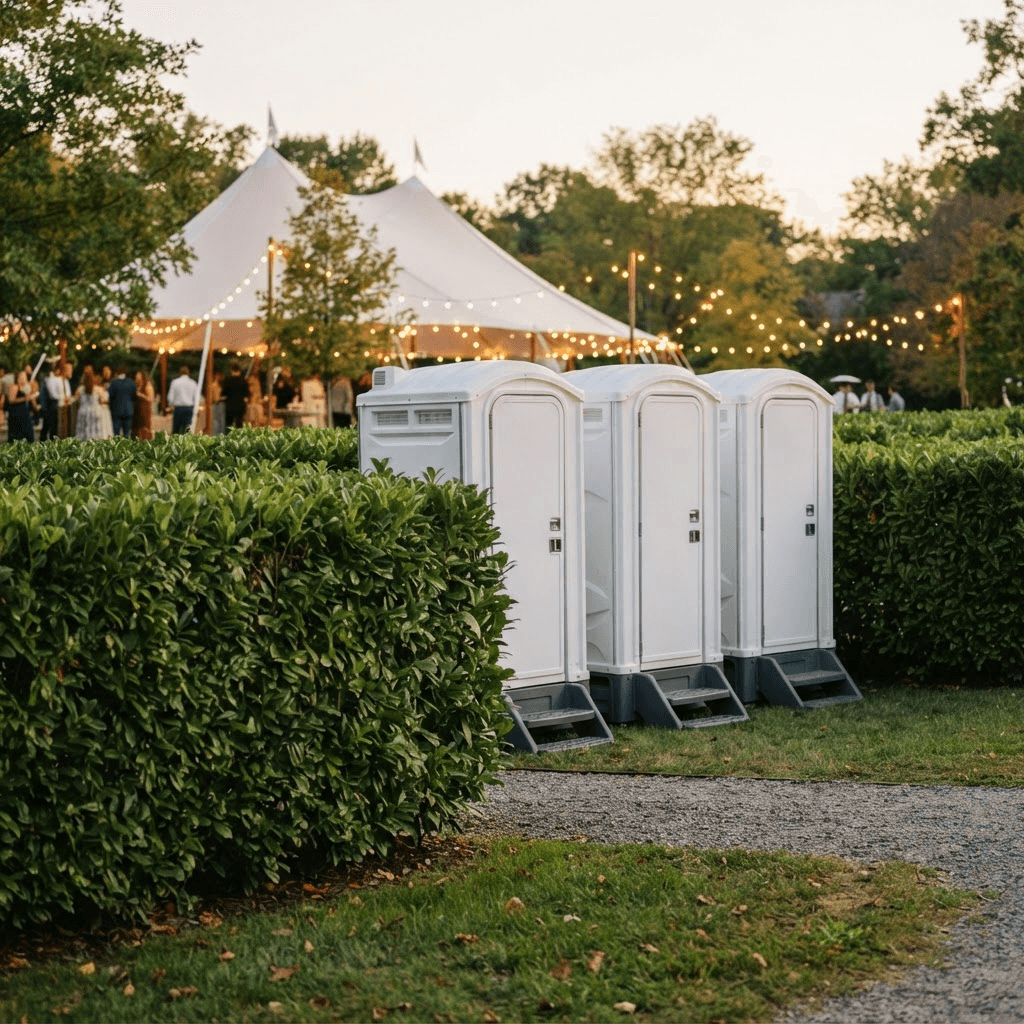
The three questions that decide everything
How many people, for how long, and is there alcohol or food. Guest count alone tells us very little: eighty people at a two-hour ceremony and eighty people at an eight-hour festival are completely different orders.
Duration matters because usage compounds. A unit that is comfortable for a short event becomes the bottleneck of a long one, and the queue does not build gradually — it appears all at once around the second hour.
Event planning starting points
The widely used industry rule of thumb for events is roughly one unit per 50 guests for a four-hour event. It is a reasonable starting figure, and these are the assumptions baked into it.
- Guests arrive and leave across the whole event rather than all at once
- No alcohol is being served, which typically increases usage significantly
- Roughly even usage across the event rather than one intermission spike
- Units are serviced or stocked before the event starts
| Guests | Up to 4 hours | 4–8 hours | With alcohol served |
|---|---|---|---|
| Up to 50 | 1 unit | 2 units | 2 units |
| 50–100 | 2 units | 3 units | 3–4 units |
| 100–250 | 3–4 units | 5–6 units | 6–7 units |
| 250–500 | 6–8 units | 9–11 units | 11–13 units |
These are planning starting points, not regulatory minimums. Permitted public events frequently have their own requirements set by the local health department or permit office, and those take precedence over any table on a rental website.
Why alcohol changes the maths
Alcohol increases both the frequency and the duration of restroom visits, and it concentrates them. Planners commonly add somewhere between a third and a half more capacity to a bar event compared with a dry one.
The other reason to overshoot on a wedding or a bar event is that your guests are queueing in their good clothes. One extra unit is almost always cheaper than the complaint.
Construction and job sites
Job sites work differently: a fixed crew, using the facility for months, with occupational health requirements attached. OSHA's sanitation standard sets minimum toilet facilities based on the number of employees, and the widely applied starting point in the industry is one unit per 10 workers for a standard 40-hour week, with servicing at least weekly.
That ratio assumes weekly servicing. Stretch the service interval and the effective capacity of each unit drops, regardless of what the ratio says. If your crew grows mid-project, the unit count needs to grow with it — tell us and we will add to the order rather than letting the existing units fall behind.
We are a rental company, not your compliance authority. The current OSHA sanitation standard, your local permit conditions and your own site safety plan are what govern your obligations. Verify the requirement that applies to your site and tell us the number you need to hit — we will make sure the equipment meets it.
Do not forget accessible units and handwashing
If the public can attend, plan for accessible provision from the start rather than adding it late. Accessible units are larger, need level ground and a clear approach, and cannot simply be squeezed into the last gap in the layout.
Handwashing is the other commonly forgotten item. Standard units include a sanitizer dispenser, which is not the same thing as a sink. Once food is being served anywhere on the site, a proper handwashing station is generally what the health department expects to see.
When the rules of thumb break down
In all of these, count the peak rather than the average. If you tell us the shape of the day, we will size for the worst fifteen minutes in it.
- Single-session events where everyone breaks at once — a ceremony, a race finish, a school programme
- Hot weather, where drink consumption climbs sharply
- Sites spread over a long distance, where one cluster of units is effectively unreachable from half the site
- Multi-day events where overnight servicing is not possible
- Crews working overtime or double shifts on a job site
Want this applied to your job?
Describe the site and the dates and we will do the sizing with you, out loud, including the parts we are unsure about.