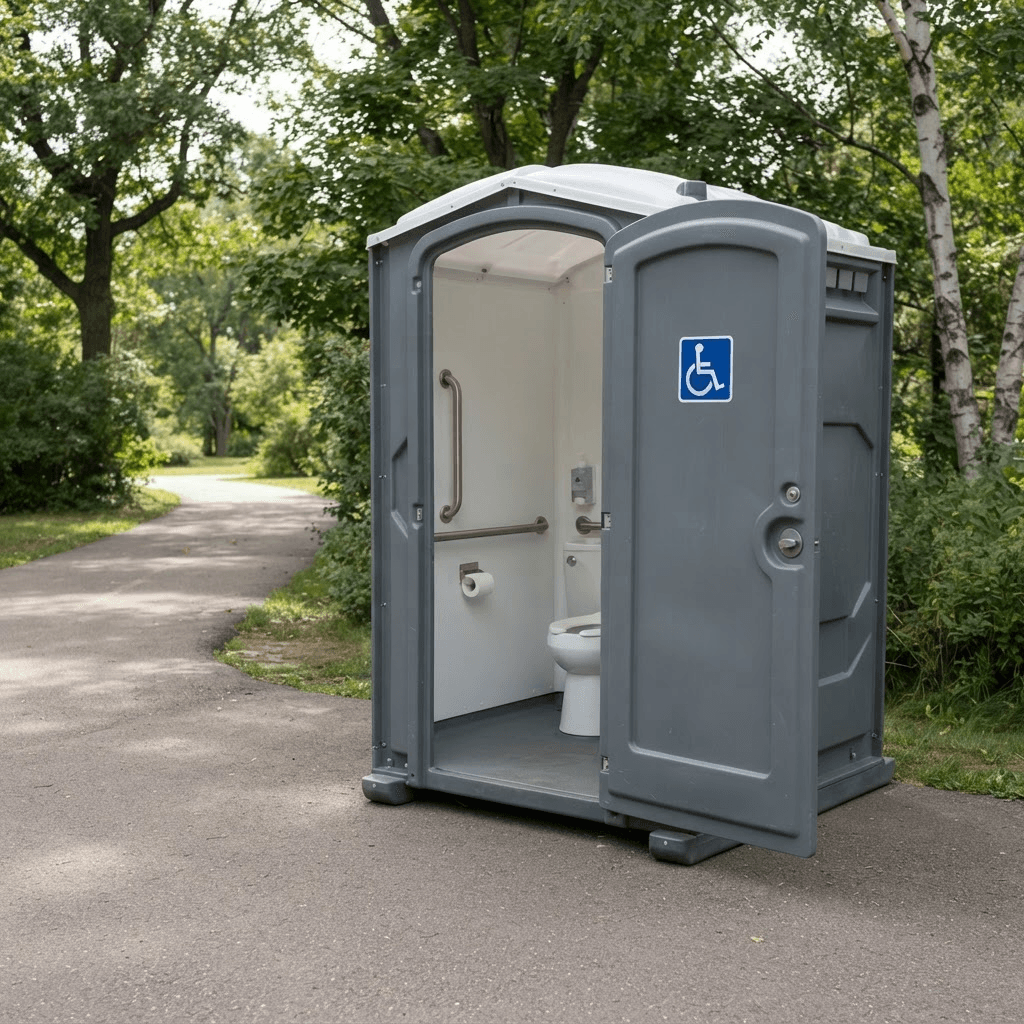
What accessible means here
An accessible portable restroom is a substantially larger enclosure with no step at the threshold, a door wide enough to admit a wheelchair, interior floor space to turn, and grab bars positioned for transfer. It is a different unit, not a standard unit with a sticker on the door.
The approach matters as much as the unit. A ground-level entry is useless at the end of a path that crosses soft grass, a curb or a cable run. We will place accessible units on the firmest, flattest approach available and flag it if the only spot you have picked will not work.
How many, and what the rules actually say
The requirements that apply to your event or site come from the ADA Standards for Accessible Design and, for construction, from your own contract and site safety plan — not from us. The frequently cited planning figure is that at least five percent of the units at a public event should be accessible, with a minimum of one, but the authoritative source for your obligation is the ADA guidance itself and whatever your permit specifies.
We will tell you plainly what we can supply and where it can go. We will not tell you that renting an accessible unit makes your event ADA compliant, because compliance covers routes, parking, signage and much more than a restroom. If your event is permitted, check the permit conditions and the ADA standards, and build the restroom plan to match.
Placement that people can actually use
Put accessible units at the front of the restroom bank, nearest the accessible route and the accessible parking, rather than at the end of a row. Leave the approach clear of staked signage, cable ramps and vendor tents. Mark the unit with signage guests can see from a distance so nobody has to survey a row of doors to find the one they need.